Fogging and hydrogen peroxide vapour systems: effective, but only in unoccupied areas
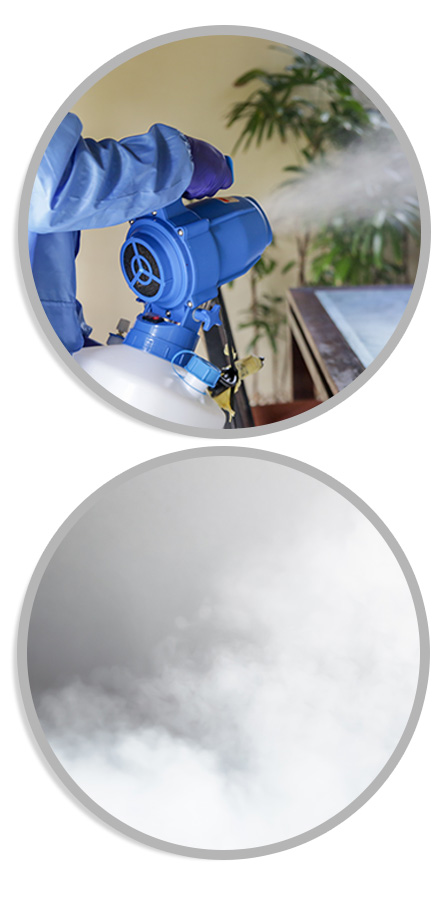
Fogging machines and hydrogen peroxide vapour (HPV) systems are commonly used for deep disinfection in healthcare, food processing, and transport. While these methods can be highly effective when correctly applied, they are not suitable for use in occupied areas and carry significant risks if misused. They should be considered as periodic treatment tools rather than continuous air purification systems.
What are fogging and HPV systems?
These systems disperse a disinfectant into the air as a fine mist (fogging) or vapour (HPV). The active ingredients—commonly hydrogen peroxide, peracetic acid, or quaternary ammonium compounds—aim to deactivate microorganisms by settling onto surfaces and penetrating the airspace.
They are typically used in:
• Hospitals and surgical rooms
• Food processing and cold storage facilities
• Public transport vehicles
• Post-contamination or outbreak response
How they work
• Fogging systems generate microdroplets that distribute throughout the room and settle on surfaces
• HPV systems flood sealed areas with vapourised hydrogen peroxide for specified dwell times
Strengths of fogging and HPV
• Proven to inactivate bacteria, viruses, spores, and fungi on both surfaces and in the air
• Reach into difficult or hidden areas that manual cleaning may miss
• Supported by test data in medical and laboratory environments
Critical limitations and risks
1. Unsafe in occupied areas
Fogging and HPV chemicals are harmful when inhaled or in contact with skin or eyes. Safe use demands:
• Full evacuation of personnel
• Signage, door seals, and area control
• Strict re-entry protocols with ventilation and clearance verification
2. Misuse can be dangerous
Poor understanding, lack of training, or assumptions that any fogging system is inherently effective can be hazardous. If the system is misapplied or poorly maintained:
• People may re-enter areas still containing harmful residues
• Surfaces and equipment may not be properly disinfected
• A false sense of security may lead to lapses in hygiene
3. No ongoing effect
These systems provide a one-time treatment. Once the space is reoccupied, new contaminants are immediately introduced. Fogging does not offer any residual action or ongoing air quality control.
4. Risk to electronics and materials
Repeated fogging may damage:
• Electrical components and control panels
• Sensor equipment and communications gear
• Finishes and surfaces, especially metals and rubber seals
Hydrogen peroxide is particularly corrosive and must not be used near sensitive equipment without manufacturer clearance.
5. Requires complete clearance of the area
It is not only personnel who must be removed—food, packaging, and consumables must also be cleared or sealed before treatment. This adds time and complexity to preparation and increases the risk of accidental contamination.
6. Disruption and cost
Each treatment cycle includes setup, application, contact time, aeration, and clearance. This limits use to periods when facilities can be fully closed and restricts frequency.
7. Regulatory and training burdens
Operators require:
• COSHH-compliant handling procedures
• Chemical safety data sheets (MSDS)
• Monitoring of concentrations and contact times
Inappropriate or unlicensed use may breach health and safety regulations.
When fogging and HPV make sense
These systems are best suited for:
• Planned deep cleans in sterile or critical settings
• Isolated treatment of unoccupied areas
• Outbreak control where high microbial loads are confirmed
They are not suitable for everyday environments, public-facing areas, or any application requiring ongoing hygiene protection while people are present.